
Ori and the Blind Forest Abilities: Unlocks & Builds
Master Ori and the Blind Forest abilities with skill unlock locations, practical combat tips, and ability point priorities for easier exploration of Nibel.
Jump to
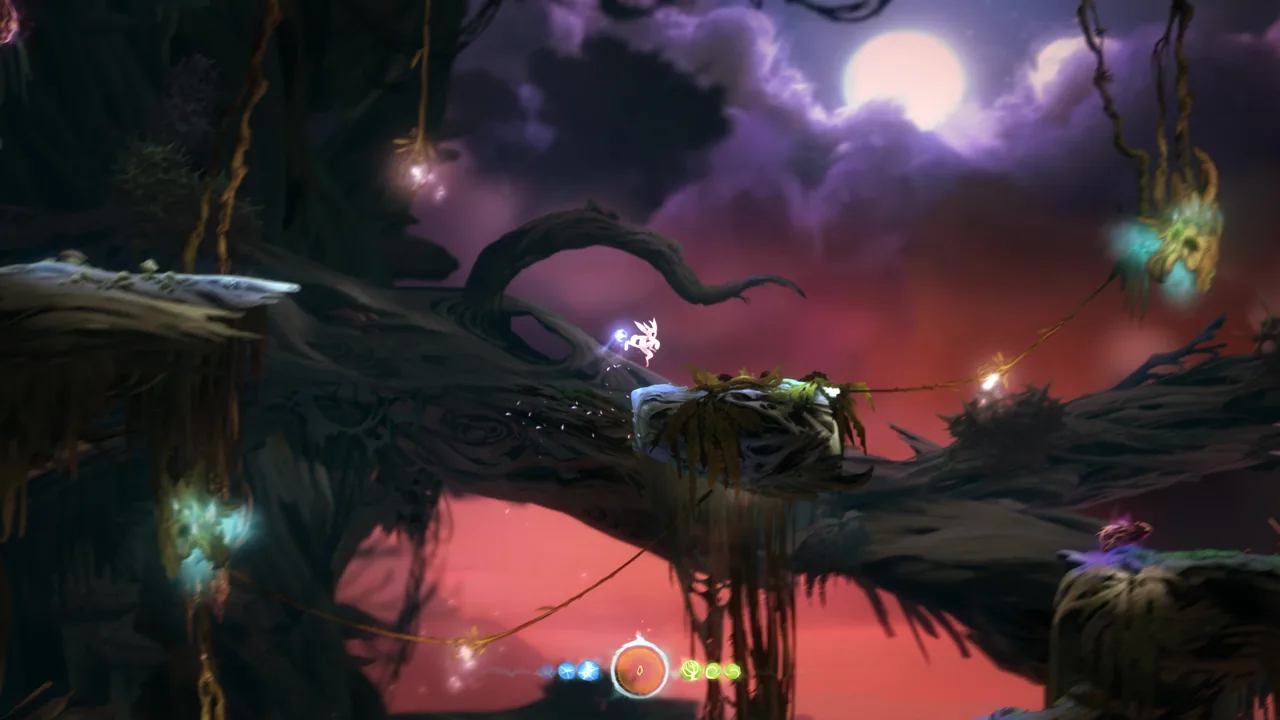
How Ori’s Abilities and Upgrades Work
A wall you can’t climb today can become tomorrow’s shortcut. Ori and the Blind Forest abilities open routes through Nibel, giving you more ways to cross hazards, solve puzzles, and handle enemies. Understanding the difference between core skills and purchased upgrades helps you spend ability points on the problems actually slowing you down.
Ori and the Blind Forest abilities come through two separate systems: skills acquired during exploration and upgrades purchased through the ability tree. Most core skills come from Ancestral Trees, while Spirit Flame arrives when you encounter Sein. Kuro’s Feather provides another essential movement tool outside the purchased upgrades.
Ability points improve that toolkit. They can strengthen attacks, make collecting items easier, improve survival, or eventually add Triple Jump. You can finish the story without spending ability points, but you still need the core skills acquired through progression.
Think about the three branches by what their upgrades do:
| Upgrade focus | What it changes | Examples |
|---|---|---|
| Combat | Attack strength and effectiveness | Spirit Flame improvements and stronger charged attacks |
| Map and collection | Finding and gathering resources | Pickup range and collectible visibility |
| Survival and movement | Recovery, swimming, and aerial flexibility | Healing upgrades, water breathing, and Triple Jump |
Spend toward your current obstacle. If enemies keep interrupting exploration, invest in attacks. If repeated mistakes drain your health, pursue survival upgrades. If your goal is collecting missed items, work toward the map upgrades.
Official page: Ori and the Blind Forest (store.steampowered.com)
Core Ability Unlocks and What They Do
The core Ori and the Blind Forest abilities turn exploration into a cycle: discover an obstacle, acquire a skill, then return with a new solution. Revisit blocked routes after an unlock instead of repeatedly attempting them with the same moves.
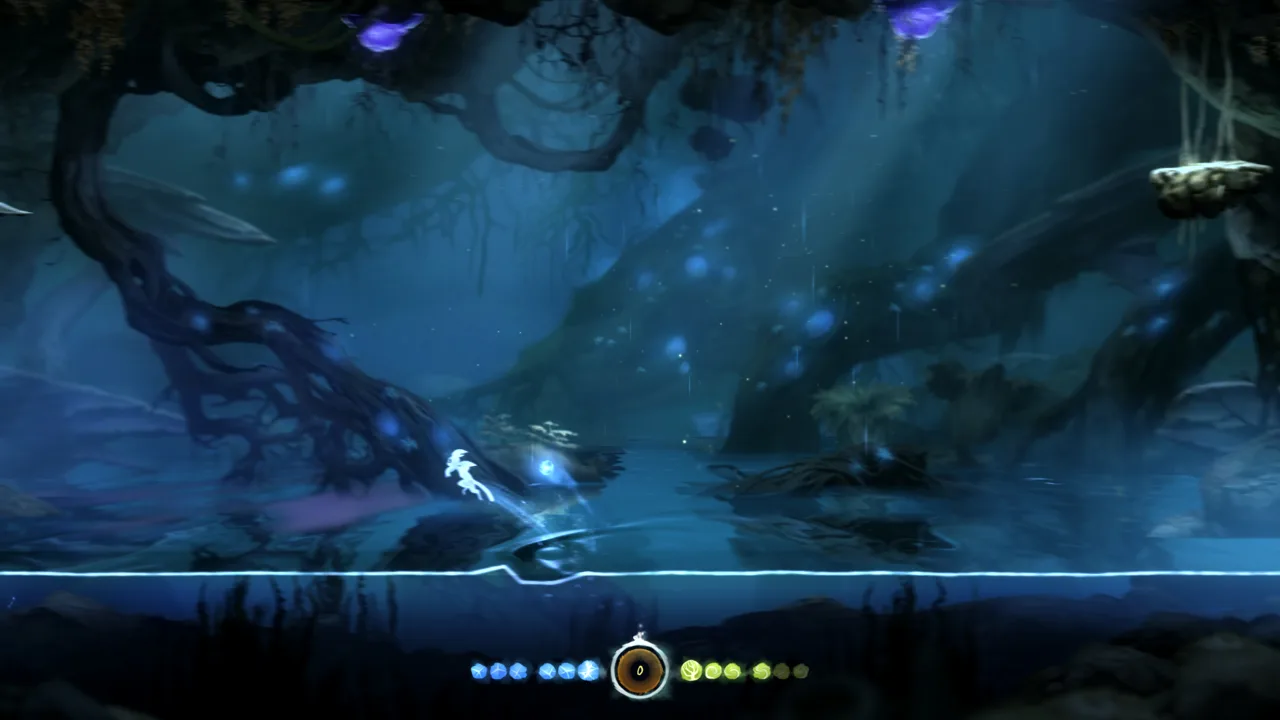 Image: Steam / Moon Studios GmbH
These are the main base-game skills and their acquisition points:
| Ability | Where you acquire it | What it does |
|---|---|---|
| Spirit Flame | Encounter with Sein | Attacks nearby enemies and breaks certain objects |
| Wall Jump | Sunken Glades | Lets Ori jump from walls to gain height |
| Charge Flame | Hollow Grove | Releases an energy-consuming blast that damages enemies and breaks certain obstacles |
| Double Jump | Gumo’s Hideout | Adds another jump while airborne |
| Bash | Ginso Tree | Launches Ori from eligible objects, enemies, and projectiles |
| Stomp | Thornfelt Swamp | Sends Ori downward to attack, activate certain mechanisms, and break barriers |
| Climb | Misty Woods | Lets Ori hold position on walls for controlled movement |
| Charge Jump | Sorrow’s Pass | Launches Ori upward or away from a wall with a powerful charged jump |
Use Bash for movement and combat
Among Ori and the Blind Forest abilities, Bash changes how you approach both enemies and gaps. Near an eligible target, you get time to aim Ori’s launch direction. The target moves in the opposite direction, letting you redirect a projectile while propelling Ori toward a platform.
Look for lanterns, enemies, and projectiles before attempting a difficult crossing. Use them as launch points, and check where the redirected target will travel before releasing Bash.
In combat, knock enemies toward spikes or redirect incoming projectiles. You don’t always need to stand nearby and finish every encounter with Spirit Flame.
Combine wall skills with aerial control
Wall Jump provides height; Climb lets you pause on a wall and position yourself more carefully. Use that pause to line up your next jump around spikes rather than immediately bouncing away.
Kuro’s Feather, acquired before entering Misty Woods, slows your descent and lets you glide. Later, it also lets you ride updrafts. Deploy it to control a landing or approach a Bash target with less downward momentum.
Charge Jump adds a powerful launch late in the game. From a wall, you can aim the launch direction. Check the destination before committing: extra height only helps when you have somewhere safe to go.
Where to Spend Ability Points
Choose Ori and the Blind Forest abilities upgrades around your immediate goal, then follow the prerequisites toward the later nodes you want. There’s little reason to leave points unused simply because you haven’t settled on a final build.

For a collection-focused run, take a foundation of early survival and combat upgrades before committing heavily to map visibility. One spending route is to unlock the first four nodes in those two branches, then complete the middle branch focused on collection and discovery.
That route favors easier cleanup later. It doesn’t need to override a more urgent need for healing or movement help.
| Spending route | Upgrades to pursue | Practical effect |
|---|---|---|
| Collection route | Early survival and combat nodes, followed by map and collection upgrades | Helps reveal missed resources for return trips |
| Survival route | Healing, swimming, and defensive upgrades | Reduces pressure from damage and underwater exploration |
| Movement route | Prerequisites leading to Triple Jump | Adds another airborne jump |
| Combat route | Spirit Flame and other attack upgrades | Makes direct fights faster and attacks more effective |
Pursue collection upgrades before a cleanup trip
Map upgrades help locate missed pickups, including Ability Cells, Life Cells, Energy Cells, and Spirit Light containers. Those discoveries can lead to more resources and further upgrades.
Work toward those reveals before sweeping familiar regions for collectibles. Then group nearby targets into the same trip instead of crossing the map for one pickup at a time.
Ultra Spirit Magnet also improves pickup convenience. Consider it when gathering resources keeps pulling you away from the route you want to take.
Choose Triple Jump for extra aerial flexibility
Triple Jump adds another jump beyond Double Jump. That extra correction can help you adjust an approach or reach a platform through an alternate route.
Pursue it if you want more freedom in the air. If you enjoy solving traversal puzzles with the core movement tools, leave it for later and practice combining Double Jump, Bash, and the feather first.
Triple Jump is an ability-tree upgrade; Double Jump is a core skill acquired during exploration. Keep that distinction in mind when planning where your points will go.
Definitive Edition: Dash and Light Burst
Two Ori and the Blind Forest abilities belong specifically to the Definitive Edition: Dash and Light Burst. Both are optional for finishing the main story, and both add useful possibilities to exploration.

| Definitive Edition ability | Unlock area | Function |
|---|---|---|
| Dash | Blackroot Burrows | Sends Ori forward quickly |
| Light Burst | Lost Grove | Throws an arcing orb of light that can damage enemies and light certain torches |
Upgrade Dash for more movement options
Dash provides a fast forward burst. Its ability-tree upgrades expand the move: Air Dash allows airborne use, while Charge Dash turns it into an attack.
Check your upgrades before planning a crossing around an aerial dash. The basic unlock and its later enhancements provide different options.
Once you have Air Dash, combine it with jumps and Kuro’s Feather to extend a crossing and control your descent. Aim for a clear landing rather than using every movement option immediately.
Aim Light Burst at torch puzzles
Light Burst throws an explosive orb along an arc. You can adjust the throw’s strength and trajectory, giving you control over where it lands.
Use it to light the torches associated with certain sealed doors. If a throw misses, adjust the arc before trying again rather than repeating the same angle.
It also provides a ranged combat option. Throw from a safe position when approaching an enemy directly would put Ori in danger.
Put Your Abilities Together in Combat and Exploration
Getting more from Ori and the Blind Forest abilities means choosing a move for the situation instead of relying on the same attack everywhere. Spirit Flame handles nearby targets, Bash redirects threats, Stomp attacks from above, and Charge Flame delivers an explosive burst at an energy cost.
Before engaging an enemy, inspect the space around it. A projectile could provide a Bash launch. A vulnerable target beneath Ori could invite Stomp. A cluster of enemies could give Charge Flame’s blast room to work.
Keep Stomp deliberate
Stomp sends Ori downward, which makes it useful for breaking appropriate barriers and attacking enemies below. It can also knock away enemy projectiles.
Check the ground before using it. Spikes and dangerous surfaces still matter, and an aggressive descent can put Ori exactly where you don’t want to land.
Use Spirit Flame alongside Stomp when attacking from above, but leave yourself room to reposition. Don’t let the downward attack become an automatic response whenever something appears below you.
Budget energy around charged attacks
Charge Flame consumes energy and needs time to charge. Set up the attack from a position where you can finish charging without rushing into danger.
Reserve it for a purpose: breaking an appropriate obstacle or hitting enemies with its blast. Use Spirit Flame, Bash, or Stomp when those tools already solve the encounter.
Turn return trips into targeted collection runs
You don’t need to explore the entire map to finish the story. For a completion run, revisit earlier regions after acquiring skills that change how you move through them.
Before setting out:
- Check the map for revealed pickups.
- Identify which blocked routes match your newer skills.
- Collect nearby Life Cells and Energy Cells along the way.
- Use new movement combinations to reassess previously awkward crossings.
Map visibility tells you where to investigate; your core skills provide the means to get there. Revealing a collectible doesn’t remove the obstacle protecting it.
In the original release, plan collection before committing to areas you cannot return from. Avoid assuming every missed pickup can wait until after the ending.
FAQ
Which Ori and the Blind Forest abilities should I prioritize?
For collection, pursue map and pickup upgrades after establishing some early survival and combat support. For movement help, work toward Triple Jump. Invest in stronger attacks when direct fights are the main thing slowing your progress.
Can I finish the game without spending ability points?
Yes. You can finish the story without purchasing ability-tree upgrades. Core skills acquired through progression are separate from those optional purchases, so a no-points run still uses the movement and combat tools found during the adventure.
Where do I unlock Bash?
Bash is acquired in the Ginso Tree. It lets you launch Ori from eligible objects, enemies, and projectiles while sending the target in the opposite direction. Use it to cross gaps, redirect attacks, and reposition during combat.
Are Dash and Light Burst available in the original game?
Dash and Light Burst are Definitive Edition additions. Dash comes from Blackroot Burrows, and Light Burst comes from Lost Grove. They expand movement and puzzle options, but neither is required to finish the main story.
Continue with
 Ori and the Blind Forest Bash: Unlock and Use GuideMaster Ori and the Blind Forest bash with tips on its Ginso Tree unlock, controller input, projectile redirects, and lantern chains. Learn to aim well.
More in Skills
Ori and the Blind Forest Best Ability Tree: Upgrade Guide
Ori and the Blind Forest best ability tree guide: choose early upgrades, improve Soul Links, and prioritize movement, combat, or collectibles on your run.

Ori and the Blind Forest Charge Flame: Unlock & Use
Master Ori and the Blind Forest charge flame: find its unlock location, learn the controls, break barriers, and fix energy problems to keep moving ahead.

Ori and the Blind Forest Charge Jump: Controls & Tips
Master Ori and the Blind Forest charge jump with ground and wall controls, Sorrow's Pass unlock tips, and practical fixes for jumps that refuse to work.
Ori and the Blind Forest Double Jump: Location & Tips
Find the Ori and the Blind Forest double jump in Gumo's Hideout, unlock Leru's skill, and learn how to clear spikes, reach ledges, and escape Moon Grotto.
Join the community
Game links and player communities: