
Ori and the Blind Forest Map: Secrets and 100% Guide
Use the Ori and the Blind Forest map to track Life Cells, Energy Cells, Map Stones, and hidden secrets, navigate Misty Woods, and plan your 100% cleanup.
Jump to
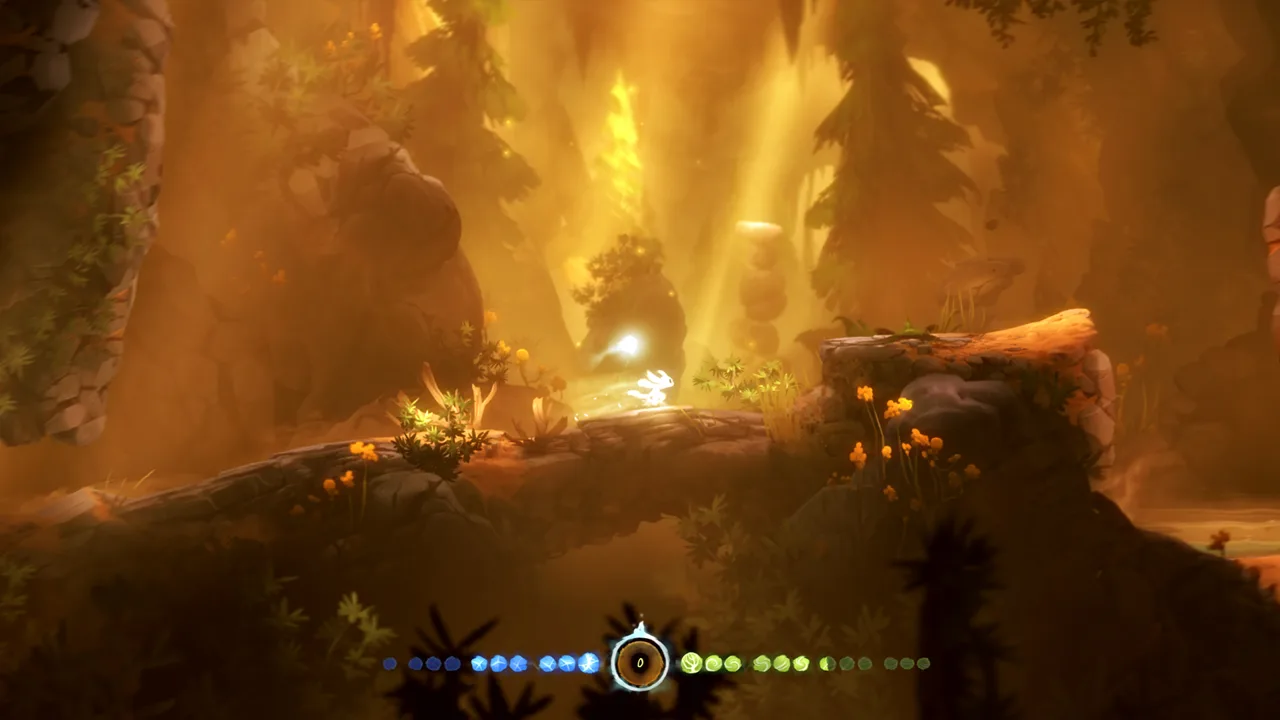
How to Use the Ori and the Blind Forest Map
One unexplored passage can leave your completion run unfinished. The Ori and the Blind Forest map helps you track Nibel’s branching paths, collectible locations, and remaining exploration before moving on. Pair the Ori and the Blind Forest map with a separate collectible checklist so you can distinguish territory you have visited from secrets you still need to find.
For collectible hunting, use an interactive Nibel map with selectable layers. Display the item category you need, match nearby landmarks to your in-game position, and trace the connecting passages. Keep the display focused: a screen crowded with every collectible makes a single missing Energy Cell harder to isolate.
Start by checking your edition. Maps labeled Definitive Edition include that version’s content, while completion advice for the original game includes restrictions around certain story areas. Keep your map, achievement checklist, and game version aligned throughout the run.
| Map feature | What it lets you locate |
|---|---|
| Collectible layers | Life Cells, Energy Cells, Spirit Light, Ability Points, and Map Stone Fragments |
| Structure layers | Map Stones, Energy Gates, Spirit Gates, Spirit Wells, and Ancestral Trees |
| Additional markers | Torches, story locations, and Easter eggs |
| Custom markers and routes | Locations and paths you want to revisit |
Browser-based Nibel maps can also offer region-specific filters. Use those when checking a particular area rather than scanning the entire forest.
Custom drawings need extra care. Some map tools discard routes and markers when the page reloads. Keep a separate note of unfinished locations before closing your browser, especially if you have marked several return trips.
Official page: Ori and the Blind Forest (store.steampowered.com)
Track Collectibles Without Confusing Them With Exploration
The Ori and the Blind Forest map supports several different completion goals. Exploring the map, collecting every Life Cell, restoring Map Stones, and discovering secrets each have their own achievement requirements.
 Image: Steam / Moon Studios GmbH
A fully explored map does not automatically mean you have found every secret. Likewise, revealing terrain does not mean Ori has physically visited every passage shown.
Organize your cleanup by the requirement you are trying to finish:
| Goal | Relevant achievement | Requirement |
|---|---|---|
| Explore the world | Master of the Forest | Visit 100% of the map |
| Collect health upgrades | Master Guardian | Collect all Health Cells |
| Collect energy upgrades | Powerhouse | Collect all Energy Cells |
| Discover hidden areas | No Stone Unturned | Find all secrets |
| Restore map structures | World at Your Feet | Restore all Map Stones |
Separate Map Stones From Map Stone Fragments
Interactive maps list Map Stones and Map Stone Fragments as different categories. Keep those layers separate when planning a search: one identifies a structure, while the other identifies a collectible.
The Map Stone achievement chain also gives you useful milestones. Marking the Way requires restoring your first Map Stone, Halfway There requires restoring 50%, and World at Your Feet requires restoring all of them.
Use those milestones to check your progress, but keep exploring the terrain itself. For Master of the Forest, the requirement is visiting the map. Revealed but unvisited areas can appear darker on the in-game map.
Search One Category at a Time
Filter the Ori and the Blind Forest map to match your immediate goal. If you are missing health upgrades, hide Spirit Light and other unrelated markers while comparing locations.
Work through this checklist for each region:
- Compare the visible passages with your in-game exploration.
- Check Life Cell and Energy Cell locations separately.
- Review Map Stones and Map Stone Fragments.
- Inspect secret locations independently of exploration coverage.
- Record anything you leave behind.
Keep “visited,” “collected,” and “secret found” as separate notes. That distinction prevents you from dismissing an area simply because you remember passing through it.
Navigate Misty Woods and Restore Your Map
Misty Woods interrupts the usual navigation routine. Its changing layout and haze make ordinary map checking less useful during the story sequence. Focus on the current environment, reachable platforms, and the objective of lighting the Shrouded Lantern.
 Image: Steam / Moon Studios GmbH
This section includes Misty Woods progression spoilers.
The Ori and the Blind Forest map becomes useful again after you complete the lantern sequence and clear the haze. That story milestone also reveals the Gumon Seal, the key used to enter the Forlorn Ruins.
| Misty Woods milestone | What happens |
|---|---|
| Travel through the changing woods | Navigate shifting passages and platform arrangements |
| Retrieve Atsu’s Torch | Carry the object needed for the lantern objective |
| Bring the torch to the Shrouded Lantern | Complete the delivery and light the lantern |
| Clear the haze | Restore map access and reveal the Gumon Seal |
| Obtain the Gumon Seal | Gain the key needed to enter Forlorn Ruins |
Watch What Changes When You Jump
Some Misty Woods platforms change when Ori jumps. Before committing to a crossing, watch the platform arrangement and identify where you can land after it changes.
When jumping would remove the support you need, try stepping off and using the feather to glide. Watch the destination platform as carefully as the one beneath you. A route that looks straightforward while standing still can become dangerous once the platforms switch.
Bash also helps with traversal. It launches Ori in the selected direction while sending the targeted projectile in the opposite direction. Aim with both movements in mind, especially when a projectile must hit an enemy or obstacle.
Adjust Your Route While Carrying the Torch
Carrying Atsu’s Torch limits your movement: you cannot use Double Jump or Climb while holding it. Plan each section around the movement available during the carry.
Set the torch down when you need to handle a nearby obstacle, then retrieve it before continuing. Avoid judging the delivery route by what Ori could reach empty-handed.
After clearing the haze, check the far-left end of Misty Woods for the hidden corridor associated with Good Eye. The corridor contains an Ability Point pickup, giving you a specific reason to inspect the area after the story objective is complete.
Check Story Areas Before Advancing
For the original Ori and the Blind Forest, completion planning matters before major story transitions. Ginso Tree and Forlorn Ruins contain collectibles and Spirit Wells tied to completion goals, and those areas cannot be revisited later in that version.
 Image: Steam / Moon Studios GmbH
Entering Mount Horu is also a point of no return in the original game. Finish your remaining world cleanup before crossing that threshold.
Keep these original-game restrictions attached to the original game. When using an Ori and the Blind Forest map labeled Definitive Edition, use matching edition-specific completion instructions alongside it.
| Original-game area | What to check |
|---|---|
| Ginso Tree | Secrets, the Energy Cell, exploration coverage, and the Spirit Well |
| Misty Woods | Secrets during the changing-woods sequence, the Energy Cell, and the post-haze corridor |
| Forlorn Ruins | Secrets, cell collectibles, exploration coverage, and the Spirit Well |
| Mount Horu | Finish outside cleanup before entering; inspect its secrets and Energy Cell during the finale |
Keep Spirit Wells on Your Checklist
Safe and Sound requires saving at every Spirit Well. In the original game, there are nine, including one directly in front of the Spirit Tree that does not appear as a standard well marker on the map.
Two wells are in Ginso Tree and Forlorn Ruins. Include them in your checks while you are inside those areas.
Use the well rather than merely walking past its location. The achievement requirement is saving at each one, so a familiar-looking marker alone does not complete that task.
Inspect the Route Before Leaving It
Before advancing through an original-game story area, pause to compare your progress with the relevant collectible categories.
Check side passages, unexplored edges, cell locations, and the area’s Spirit Well. For Misty Woods, keep the changing-layout sequence and the post-haze corridor as separate checklist entries.
Avoid relying on a numbered secret list alone. Record the actual location and nearby landmark as well. A note such as “passage beside the water” remains useful when comparing maps that organize their markers differently.
Plan Your 100% Map Cleanup
Use the Ori and the Blind Forest map to answer a specific question each time you open it. “Which passage have I missed?” and “Which Energy Cell remains?” require different searches, even when they lead to the same region.
Start with your unfinished achievement requirement, then narrow the display until only relevant markers remain.
- Identify the goal. Check whether you need exploration, cells, secrets, Map Stones, or Spirit Wells.
- Choose a region. Compare that area with your in-game map before planning a longer trip.
- Enable the matching layer. Remove unrelated icons from view.
- Trace the connecting passages. Look for a traversable route rather than judging straight-line distance.
- Complete the visit. Check the pickup, passage, or structure involved.
- Update your notes. Record what you finished and what still needs attention.
Use Your Abilities to Read the Terrain
When a collectible looks close but remains inaccessible, inspect the surroundings for a traversal opportunity. Bash can use enemies and projectiles, while Charge Flame can break certain barriers and open shortcuts.
Look above and below the marker. Nibel’s stacked passages make two locations appear adjacent even when the route between them travels elsewhere.
For projectile puzzles, remember that Ori and the projectile move in opposite directions during Bash. Position yourself for the launch you need, then account for where the redirected shot will travel.
Diagnose the Last Missing Requirement
If Master of the Forest remains unfinished, inspect darker unexplored sections of the in-game map. If No Stone Unturned remains unfinished, return to your secret checklist instead.
For cell achievements, compare health and energy pickups separately. For World at Your Feet, review the Map Stones. For Safe and Sound, review the wells where you have actually saved.
Keep that final search narrow. Rechecking every marker mixes several completion systems together and makes it harder to identify the one remaining task.
FAQ
Which Ori and the Blind Forest map should I use?
Use a Nibel map that matches your edition and includes filters for the collectibles you need. Separate layers for cells, secrets, Map Stones, and Spirit Wells help you investigate unfinished goals without crowding the display.
Does exploring 100% of the map mean I found every secret?
No. Master of the Forest requires visiting 100% of the map, while No Stone Unturned requires finding all secrets. Track those requirements separately during cleanup.
Why can’t I use the map normally in Misty Woods?
The changing-woods sequence limits normal navigation. Complete the Atsu’s Torch delivery and light the Shrouded Lantern to clear the haze and restore map access. The Gumon Seal is revealed afterward.
What should I finish before entering Mount Horu?
In the original game, finish your remaining outside exploration, collectibles, secrets, Map Stones, and Spirit Well saves before entering. Mount Horu is a point of no return in that version.
Continue with
 Ori and the Blind Forest Misty Woods: Complete GuideOri and the Blind Forest misty woods guide: find all four Keystones, learn Climb, solve shifting paths, restore the lantern, and reach the Forlorn Ruins.
More in Maps

Ori and the Blind Forest Forlorn Ruins: Puzzle Guide
Master Ori and the Blind Forest forlorn ruins with gravity puzzle solutions, Keystone routes, secret locations, and tips for escaping Kuro. Find your way.
Ori and the Blind Forest Ginso Tree: Route and Escape
Master the Ori and the Blind Forest Ginso Tree with portal puzzle solutions, Bash tips, collectible reminders, and a clear route through the water escape.

Ori and the Blind Forest Mount Horu: Map & Route Guide
Explore Ori and the Blind Forest Mount Horu with a room-by-room opening route, collectible checks, lava puzzle tips, and help for the final Kuro escape.
Ori and the Blind Forest Sorrow Pass Walkthrough & Map
Use this Ori and the Blind Forest sorrow pass guide to find every Keystone set, solve the laser puzzles, unlock Charge Jump, and reach the Sunstone safely.
Join the community
Game links and player communities: