
Ori and the Blind Forest How Long to Beat: Time Guide
Ori and the Blind Forest how long to beat: compare story, exploration, and 100% completion times for both editions, plus tips to plan a full playthrough.
Jump to
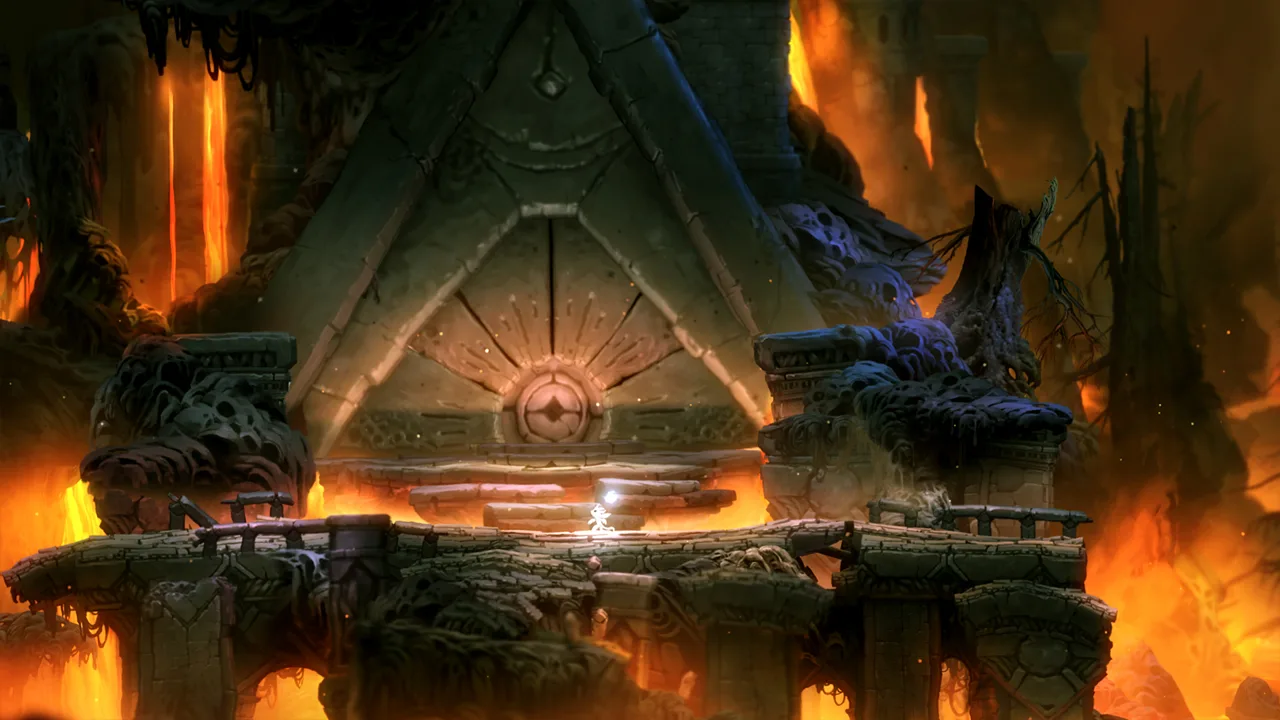
How Long Does Ori and the Blind Forest Take to Beat?
The answer to Ori and the Blind Forest how long to beat is about 8 hours for the original story or 9 hours for Definitive Edition. Your Ori and the Blind Forest how long to beat estimate helps you decide whether to aim for the credits over a weekend or leave room for every secret. Budget around 12–13 hours for completion, with extra breathing room if precise platforming takes practice.
Ori’s adventure is compact, but its demanding movement challenges can stretch your playthrough. Exploration adds another variable: following the main objective takes less time than checking every passage and returning to obstacles with new abilities.
| Playthrough goal | Original game | Definitive Edition |
|---|---|---|
| Main story | About 8 hours | About 9 hours |
| Main story plus extras | About 10½ hours | About 11½ hours |
| Completionist playthrough | About 12 hours | About 13 hours |
These rounded benchmarks are useful planning targets. The original’s detailed averages sit slightly above its rounded story and completion estimates. Definitive Edition’s detailed averages also sit above its rounded benchmarks.
Choose the row that matches your goal before comparing your progress with anyone else’s. Reaching the ending, exploring the map, and earning every achievement involve different amounts of work.
For a first visit, give yourself space to learn. An unfamiliar route, a tricky escape, or a tempting side passage can all push you beyond the headline estimate without making your playthrough unusually slow.
Original vs. Definitive Edition: Which Time Should You Use?
Check the edition’s name before settling on your Ori and the Blind Forest how long to beat target. The original and Definitive Edition have separate completion benchmarks, and their numbers should stay separate when planning your playthrough.
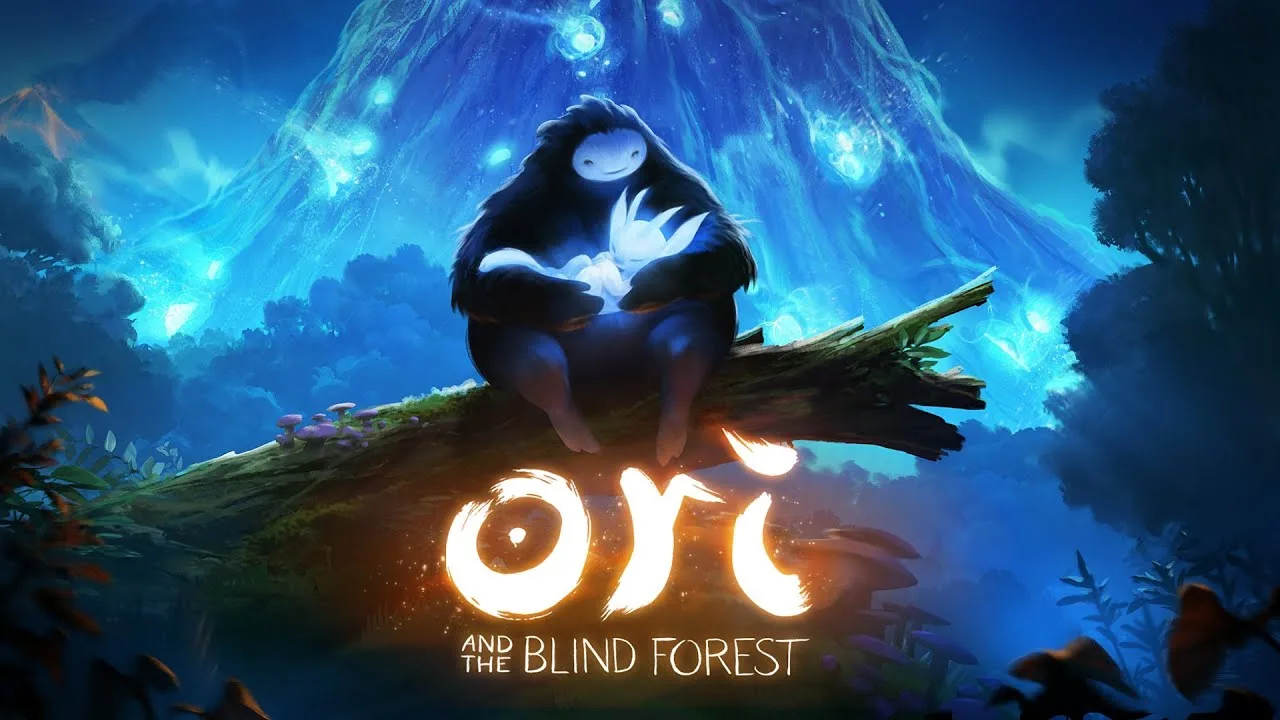
Definitive Edition’s rounded estimates run about an hour longer across the three main categories. Its movement options also include Dash and Light Burst, alongside the original game’s abilities. That gives you more actions to learn as you navigate Nibel.
The average difference between editions is smaller than the gap between a focused story run and a thorough exploration run. For the original, adding side content moves the rounded estimate from 8 hours to 10½ hours. For Definitive Edition, it moves from 9 hours to 11½ hours.
Set a goal before starting
Pick the description that sounds like your intended playthrough:
- Story: Follow the main objectives and collect useful pickups along the way.
- Story plus extras: Investigate optional routes without making every missing collectible a priority.
- Completionist: Search thoroughly, revisit accessible areas, and work through the map’s remaining secrets.
Keep achievement hunting as a separate consideration. A completion estimate is a useful budget for thorough exploration, but special challenges can demand additional runs.
You can check the original game’s title and purchase options on the Ori and the Blind Forest Steam page. When comparing your own time afterward, match both the edition and your playthrough goal.
Why Platforming and Exploration Change Your Playtime
Your Ori and the Blind Forest how long to beat estimate depends heavily on how quickly the movement clicks. Knowing where to go helps, but you still need to execute the jumps, redirects, and escapes.

The Ginso Tree captures that learning curve especially well. Its early rooms test familiar actions such as wall jumping and double jumping. After you gain Bash, the challenges ask you to rethink enemies and projectiles as tools for movement and puzzle solving.
| Challenge | What it asks you to do | Tip for making progress |
|---|---|---|
| Portal rooms | Navigate platforms and redirect projectiles through portals | Trace the route before committing to a jump |
| Bash platforming | Launch from eligible targets toward the next safe position | Identify your next target before launching |
| Projectile puzzles | Send a projectile toward an obstacle while Ori moves away | Check both travel directions before releasing |
| Escape sequences | Chain movement actions under pressure | Focus on the next action instead of rushing every input |
Bash briefly pauses the action while you choose a direction. Ori launches one way, while the affected enemy or projectile moves the other way. That relationship matters: a correct projectile redirect can still send Ori into spikes if you ignore the landing path.
Use that aiming pause deliberately. Look beyond the immediate target and decide where you need to end up.
The Ginso Tree escape then asks you to combine those lessons under pressure. Its rising water turns individual movement decisions into a continuous sequence. Repeated attempts can add time even though a successful escape is brief.
Exploration adds a different kind of time
New abilities also change how you read earlier areas. A route that looked blocked can become worth another visit, and searching for upgrades pulls you away from the main objective.
For a shorter run, follow the current objective and leave distant optional routes for another goal. For a thorough run, group nearby exploration together instead of repeatedly crossing the map for individual pickups.
Neither choice needs to become a race. Ori’s hand-painted scenery and orchestral score are part of the experience, and stopping to enjoy them belongs in your personal playtime budget.
How Long Does 100% Completion Take?
For a thorough run, the Ori and the Blind Forest how long to beat target rises to roughly 12 hours in the original or 13 hours in Definitive Edition. The detailed averages sit slightly higher, so leave some room beyond those rounded numbers.
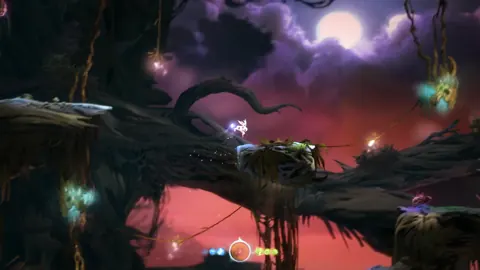
 Image: Steam / Moon Studios GmbH
Completion involves more than reaching the ending. Health Cells, Energy Cells, secrets, Map Stones, and unexplored passages all create reasons to look beyond the main route.
Separate map exploration from collectible cleanup. Visiting every part of the map and finding every secret are distinct achievement goals. Finishing one checklist does not automatically finish the other.
Watch the original game’s missable areas
In the original release, some areas cannot be revisited after their story sequences. The Ginso Tree and Forlorn Ruins are among the areas that require attention while you are there, and entering Mount Horu prevents returning to the wider world.
Check collectibles before leaving restricted areas. Complete your remaining accessible cleanup before entering Mount Horu, rather than planning to return afterward.
Use a guide made for your edition when pursuing every collectible. Keep original-release restrictions attached to the original game instead of applying them automatically to Definitive Edition.
Every achievement takes a different commitment
Several achievements ask for specific feats beyond ordinary exploration:
| Achievement | Unlock requirement |
|---|---|
| Supersonic | Finish the game in under 3 hours |
| Elite | Complete the game without spending an Ability Point |
| Immortal | Complete the game without dying |
| Master of the Forest | Visit 100% of the map |
| No Stone Unturned | Find all secrets |
Do not confuse Elite with avoiding the movement abilities gained through story progression. Its requirement concerns spending Ability Points.
For your first playthrough, learn the route and movement before taking on strict achievement conditions. Trying to explore thoroughly while also rushing or avoiding every death creates competing priorities.
The Ori and the Blind Forest how long to beat completionist benchmark is therefore a starting budget for exploration, rather than a promise that every achievement will fit into the same session. Leave additional time for practice and any challenge runs you choose to pursue.
Can You Finish Ori in a Weekend?
Yes—both editions fit into a weekend if you can make room for their roughly 8–9-hour story estimates. A completionist attempt needs a larger block of time, especially when you are still learning the controls.
For shorter sessions, use the story-plus-extras estimates to plan a week of steady progress:
| Edition | Daily session length | Approximate schedule with extras |
|---|---|---|
| Original game | 1½ hours | About 7 days |
| Definitive Edition | 1½ hours | About 8 days |
Use your Ori and the Blind Forest how long to beat estimate to reserve time, then adjust around the sections that need practice. A difficult room can occupy more of a session than a long stretch of familiar terrain.
To keep progress steady:
- Practice Bash deliberately. Check Ori’s direction and the target’s opposite direction before releasing.
- Create Soul Links as you progress. Use the checkpoint system instead of carrying unnecessary replay distance into the next challenge.
- Match detours to your goal. Explore nearby optional routes when pursuing extras; keep following the objective when aiming for the credits.
- Check the original game’s collectibles before committing to restricted areas. Avoid turning a missed pickup into another playthrough.
- Give demanding escapes your full attention. Learn the sequence of actions rather than trying to force every attempt faster.
What about a three-hour clear?
A sub-three-hour finish is an achievement target, and experienced repeat runs can be much shorter than an initial playthrough. Familiarity removes the time spent figuring out routes, solving puzzles, and learning how abilities interact.
That makes a fast replay a poor yardstick for a first visit. A practiced player already knows which direction to travel and what the next room demands.
For an initial Ori and the Blind Forest how long to beat budget, use the story or exploration benchmarks. Save the strict timer for a run where remembering the route is part of the challenge you want.
FAQ
What is the Ori and the Blind Forest how long to beat estimate for beginners?
Start with about 8 hours for the original story or 9 hours for Definitive Edition. Allow extra time for learning platforming sequences and exploring. Individual first playthroughs can reach 11–14 hours, particularly with frequent retries or extensive exploration.
How long is Ori and the Blind Forest: Definitive Edition with extras?
Plan for roughly 11½ hours for the story plus extras. The detailed average sits slightly above that rounded estimate. A completionist playthrough takes longer, with a rounded benchmark of about 13 hours.
Can you beat Ori and the Blind Forest in under three hours?
Yes. Supersonic requires finishing in under three hours. Treat it as a dedicated challenge after learning the route and movement, rather than the expected length of an initial playthrough.
Does 100% completion mean earning every achievement?
Map exploration, collectibles, and special challenge achievements have separate requirements. Earning every achievement also involves goals such as finishing without dying or spending an Ability Point. Budget additional practice and replay time beyond the usual completion estimate.
Continue with
 Ori and the Blind Forest Speedrun: Routes and TricksPlan your Ori and the Blind Forest speedrun with beginner routing tips, All Skills skips, energy management, and practical advice for a faster finish.
More in Guides
Ori and the Blind Forest Can You Play After Completion?
Ori and the Blind Forest can you play after completion? Learn how saves influence backtracking, missable achievements, collectibles, and your 100% cleanup.

Ori and the Blind Forest Definitive Edition vs Original
Ori and the Blind Forest definitive edition vs original: compare new areas, abilities, fast travel, difficulty modes, and Steam extras before you choose.
Ori and the Blind Forest Difficulty: What to Expect
Understand Ori and the Blind Forest difficulty, choose your starting mode, manage Soul Links, and prepare for demanding platforming and escape sequences.

Ori and the Blind Forest Walkthrough: Story & Secrets
Use this Ori and the Blind Forest walkthrough to plan your route, manage Soul Links, track missable collectibles, and prepare for the Mount Horu escape.
Join the community
Game links and player communities: